Tadmur, Homs
Palmyra
The Bride of the Desert
تدمر
Why visit
- One of the great archaeological landscapes of the ancient world
- Extraordinary desert light for photography
- A crossroads of Roman, Persian and Arab influence
Overview
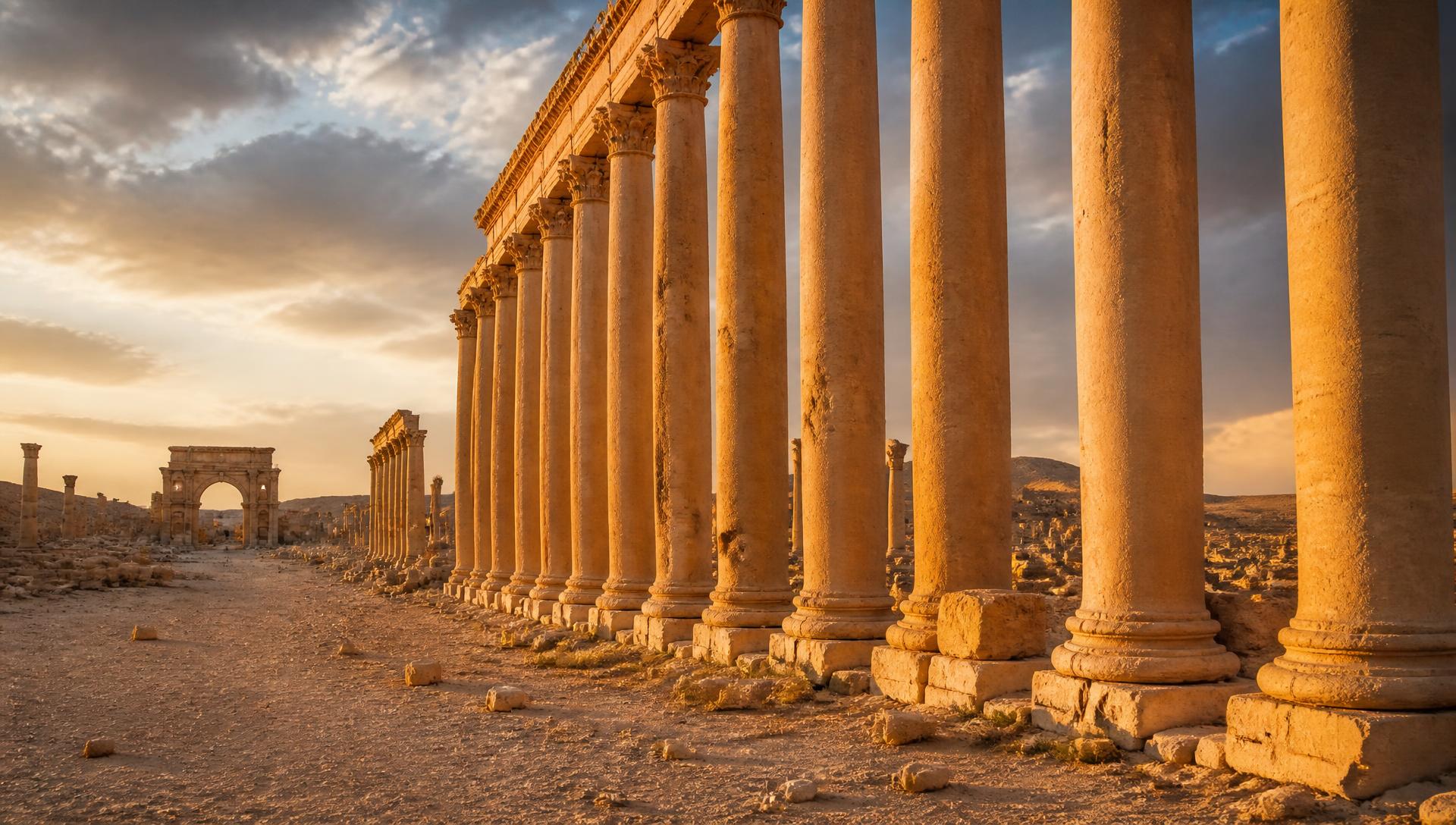
Palmyra rose in the oasis between the Mediterranean and the Euphrates as a caravan city linking east and west. Its ruins spread across the desert plain: a great colonnade, temples, a theatre and tower tombs, all in warm limestone that turns gold at sunset.
History
Palmyra became a wealthy trading centre under Roman influence and reached particular prominence in the 3rd century CE under Queen Zenobia. The site is inscribed on the UNESCO World Heritage List and has suffered documented damage in recent decades.
Architecture
Greco-Roman planning combined with local Semitic and Persian design traditions.
Stories & Legends
Zenobia's Palmyra remains one of antiquity's most discussed episodes of ambition and resistance.
Things to see
- · Great Colonnade
- · Temple of Bel area
- · Roman Theatre
- · Valley of the Tombs
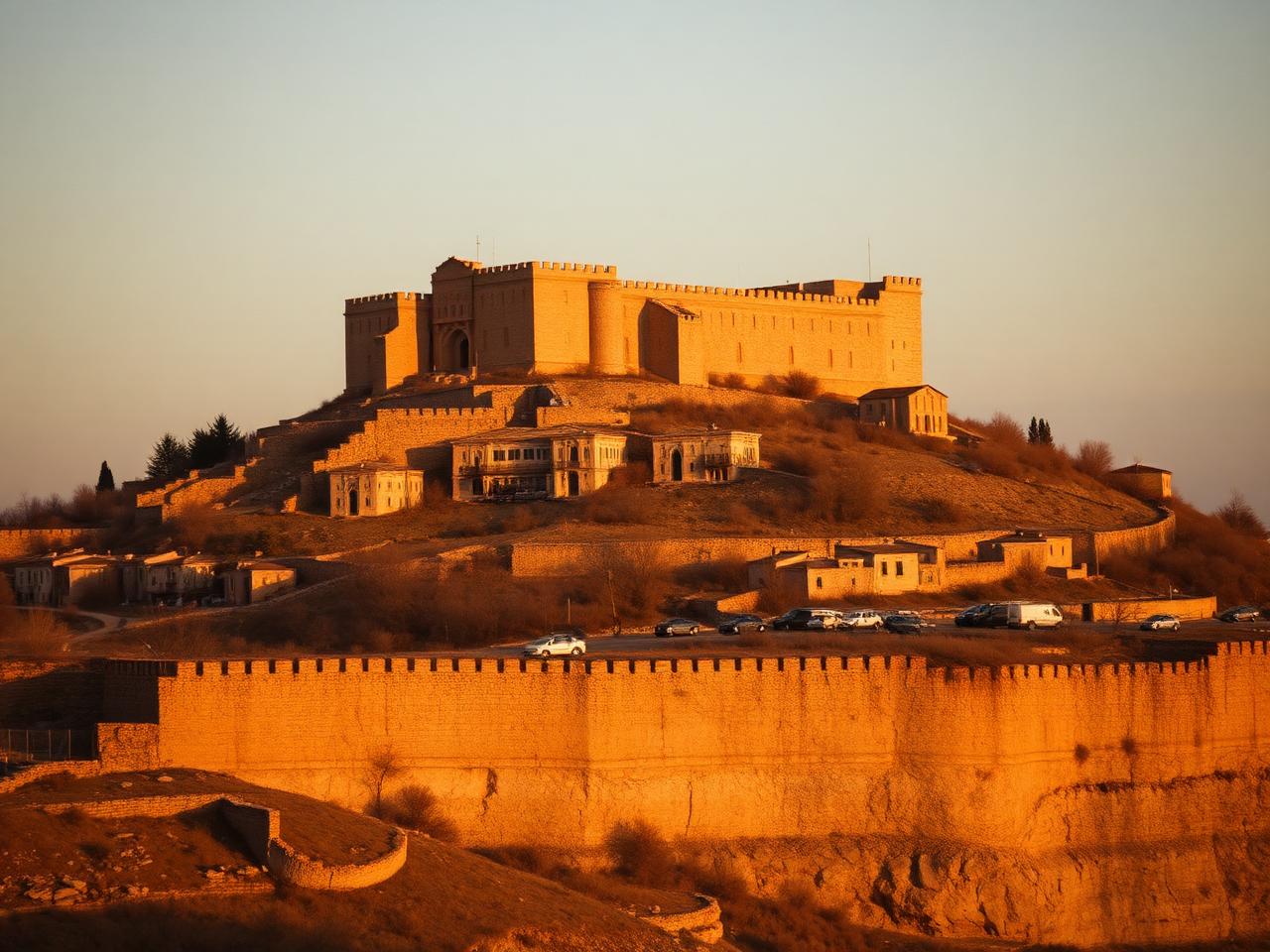
- · Palmyra Castle viewpoint
Things to do
- · Sunrise and sunset photography
- · Guided archaeology walk
- · Desert road trip stop
Visitor tips
- · Bring water, sun protection and sturdy shoes
- · Check current access conditions before travelling
- · Hire a local licensed guide for context
Gallery
Map
Coordinates: 34.5566, 38.2739
Open in the DAHAB mapReviews
Traveler reviews open once accounts are live. No placeholder ratings are shown.